Ethereum Layer-2 Fees Fall as Rollup Adoption Grows
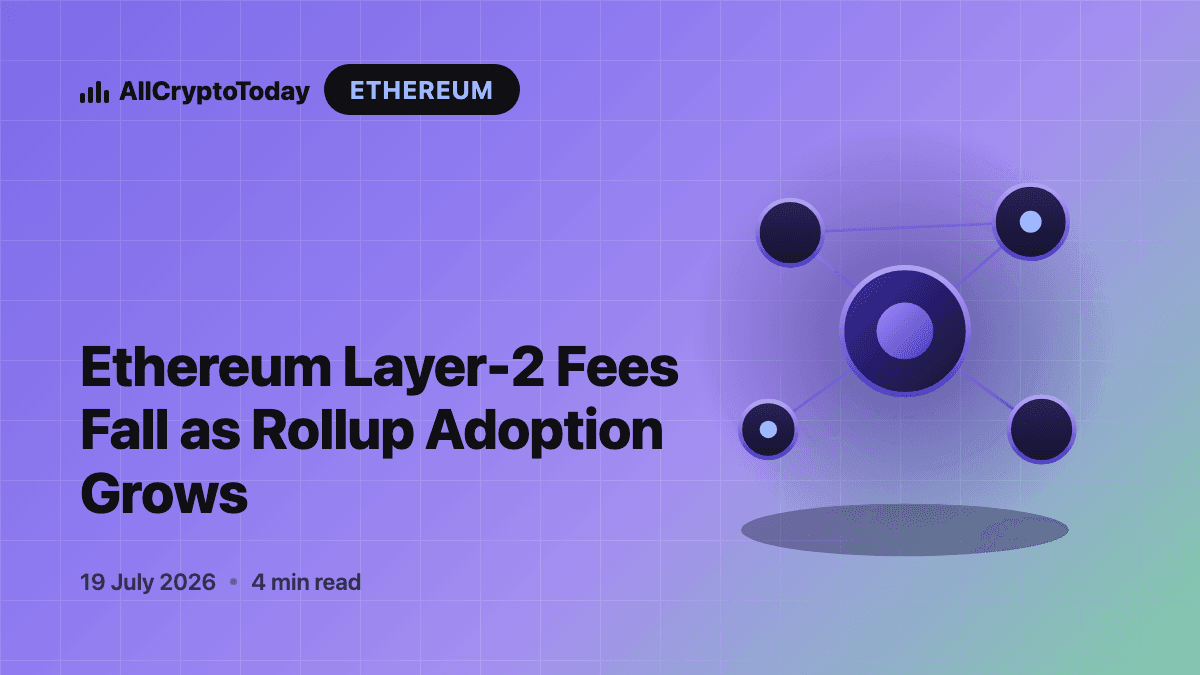
The cost of moving value across Ethereum's Layer-2 networks has been trending lower, and analysts say the shift reflects a broader migration of activity onto rollups. As more everyday transactions settle on these secondary networks rather than directly on Ethereum's base layer, users are reportedly paying less for transfers, swaps and other on-chain actions.
What Layer-2 networks do
Layer-2 networks, often called rollups, are built on top of Ethereum to handle transactions more cheaply and quickly. They bundle many individual transactions together, process them off the main chain, and then post a compressed summary back to Ethereum for final settlement.
The result is a system that inherits much of Ethereum's security while spreading the cost of base-layer settlement across many users at once. When more people share that cost, the fee paid by each individual tends to fall.
Why fees are falling
Several factors appear to be working together, according to observers.
More users, more sharing
Rollups become more efficient as they get busier. Because the fixed cost of posting data back to Ethereum is split among all the transactions in a batch, higher usage can push the per-transaction cost down rather than up.
Protocol upgrades
Recent changes to how Ethereum handles data availability have made it cheaper for rollups to publish their transaction data. On-chain data indicates this has been one of the more meaningful contributors to lower Layer-2 costs.
Cheaper block space on Layer-2 tends to be self-reinforcing, because lower fees invite more activity, and more activity spreads the fixed costs even thinner.
Who benefits
Lower fees are most noticeable for smaller, frequent transactions — the kind that base-layer costs once made impractical. Reports suggest this is especially relevant for stablecoin payments and everyday DeFi activity, where a few dollars in fees can outweigh the value being moved.
Developers may also benefit, as cheaper transactions make it easier to design applications that rely on frequent on-chain interactions without pricing out ordinary users.
A note of caution
Fee levels are not fixed. They can rise again during periods of heavy demand, and different rollups price their services differently. Users comparing networks should look beyond headline fees to factors such as security assumptions, withdrawal times and how decentralised each system really is. None of this is investment advice.
The bigger picture
The gradual decline in Layer-2 fees fits a long-running goal for Ethereum: keep the base layer secure and decentralised while pushing everyday activity to networks optimised for scale. If the trend holds, cheaper transactions could make on-chain applications feel closer to the responsiveness people expect from ordinary apps. As always, the real test will be how these networks behave under sustained pressure rather than during quieter stretches.
Related
DISCLAIMER
All the content on this site should not be considered investment advice. Investing is speculative. When investing your capital is at risk.