Can Ethereum ETFs Ever Offer Staking Rewards?
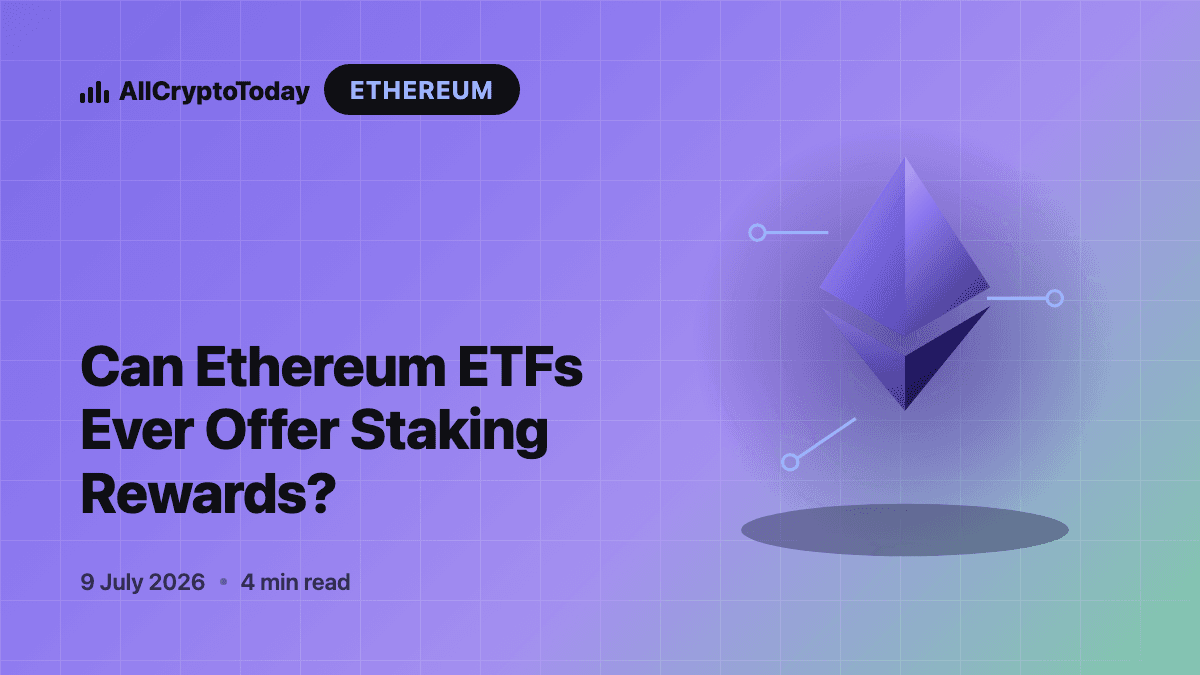
Spot Ethereum exchange-traded funds opened a familiar door for many investors: a regulated, brokerage-friendly way to gain exposure to ETH without holding the asset directly. Yet one feature that makes Ethereum distinctive is missing from most of these products. Native to the network is staking, the process by which holders help secure the blockchain and earn rewards in return. So far, reports suggest that the majority of listed Ethereum ETFs do not pass those rewards along to shareholders. The question of whether they ever will has become one of the more closely watched debates in the space.
What staking actually does
At its core, staking is how Ethereum reaches consensus. Participants lock up ETH to help validate transactions, and in exchange the protocol issues periodic rewards. For a long-term holder, this can represent a meaningful additional source of return beyond simple price appreciation.
An ETF that merely holds ETH captures price movement but leaves this yield on the table. From an investor's perspective, that can feel like owning a dividend-paying stock through a fund that quietly discards the dividends. It is precisely this gap that has fueled interest in staking-enabled products.
Why funds have held back
If staking is so attractive, why do most funds avoid it? The answer lies in a cluster of practical and regulatory concerns.
Liquidity and withdrawals
Staked ETH has not always been instantly accessible. Network upgrades have made withdrawals more predictable, but a fund must be able to meet redemptions on demand. On-chain data indicates that unstaking can involve queues, which complicates the daily liquidity that ETFs are expected to provide.
Custody and operational risk
Staking requires running or delegating validator infrastructure, and mistakes can carry penalties. Fund issuers must weigh who controls the keys, how rewards are tracked, and what happens if a validator underperforms.
Regulatory classification
Perhaps the largest hurdle is how regulators view staking itself. Analysts say the central issue is whether earning staking rewards through a pooled product resembles a service that triggers additional oversight. Until that framing is settled, issuers tend to proceed cautiously.
Passing staking rewards to fund holders is technically achievable today, but the harder work is fitting that mechanism into existing investor-protection frameworks.
The path toward staking ETFs
None of these obstacles are necessarily permanent. Several issuers have signaled interest in adding staking features, and some jurisdictions outside the United States have already experimented with staking-inclusive products. Advocates argue that a well-structured fund could stake a portion of its holdings while keeping enough liquid to handle redemptions.
The likely outcome, many observers suggest, is a gradual and conditional approval rather than a sudden green light. Regulators may want clear disclosures about how rewards are generated, how risks are managed, and how any slashing penalties would affect shareholders.
What it could mean for investors
If staking rewards do eventually flow through to ETF holders, the appeal of these products could grow. A yield component would differentiate Ethereum funds from simpler Bitcoin equivalents and might narrow the gap between holding ETH directly and holding it through a fund.
Still, added yield tends to come with added complexity. Investors would need to understand that staking introduces risks a plain spot fund does not carry. As always, none of this is investment advice, and anyone weighing these products should consider their own circumstances and consult a qualified professional.
For now, the honest answer to the headline question is: quite possibly, but not automatically. The technology exists, the demand exists, and the primary obstacle is regulatory clarity rather than engineering.
Related
DISCLAIMER
All the content on this site should not be considered investment advice. Investing is speculative. When investing your capital is at risk.